
Dec
16
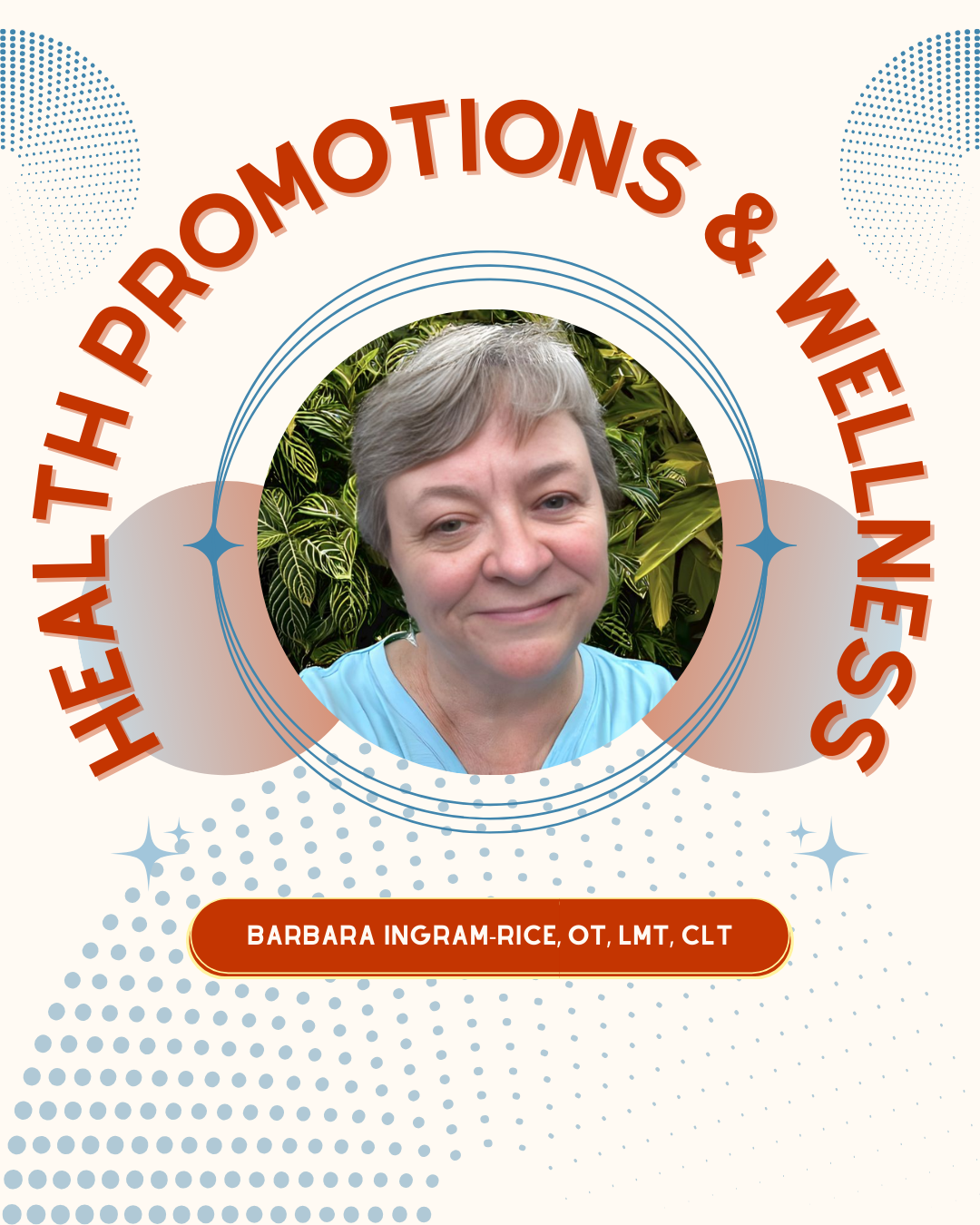 Sacred Pause: The Power of Rest, Ritual, and Reflection for OTs
Barbara Ingram-Rice, OT. LMT, CLT
Abstract
Sacred Pause: The Power of Rest, Ritual, and Reflection for OTsBarbara Ingram-Rice, OT. LMT, CLT
Abstract

The updated Florida Occupational Therapy Practice Act defines health management as “therapeutic services designed to develop, manage, and maintain health and wellness routines” (The Florida Legislature, 2022). The American Occupational Therapy Association also de- fines it as an instrumental activity of daily living (IADL) in the Occupational Therapy Practice Framework (American Occupational Therapy Association [AOTA], 2020). The goal of health management is to improve or maintain health to support participation in occupations. The categories of health and wellness can be broken down into the following categories (AOTA, 2022):
 The pelvic floor: The muscle group we all should know more about
by: Sujata Martins, MS, OTR/L, CD
Out of sight, out of mind is a common saying for most and unfortunately tends to be applied to the pelvic floor. By learning to take care of our pelvic floor, most of us can avoid embarrassing accidents, as well as spending money on incontinence products, medications, and even surgery. It is also extremely valuable for pregnant women in order to prepare for delivery and postpartum healing, and plays an important role in intimacy.

by: Kimberly McKinney MOT, MPT, tDPT, PHC
FOTA SIS Early Intervention/School Systems Chair H2 Health at Georgia-Pacific Palatka
The news about the coronavirus is everywhere, but what effect is it having on kids? According to a new study from China’s Shenzhen province (led by scientists from the Johns Hopkins Bloomberg School of Public Health and the Shenzhen Center for Disease Control and Prevention) believes that although children do contract COVID-19 they do not get sick as quickly as adults. This is believed to be due to children having healthier lungs (from not smoking or fewer years of exposure to pollution) (Pappas, 2020).

by: Anjali K. Parti, OTD, OTR/L
Mental Health Special Interest Section FOTA
As you are all aware, the United States along with the global community is experiencing a period of social isolation, disengagement, social distancing, heightened public health precautions, and an overall sense of change in ‘normal’ due to a novel strain of the Coronavirus, COVID-19. Several countries are experiencing new social realities and limitations in order to prevent retrieving or spreading the virus. All Americans are encouraged to self-quarantine and limit exposure to gatherings or environments of a quantity of 10 or less people and implement 6-foot distance between one another. In short, Americans are discouraged from leaving their homes if possible. This is a significant societal shift which can yield many challenges to routine, personal and professional growth, emotional regulation, wellness, mental health, coping strategies stemming from a general feeling of ‘cabin fever’.
This is an unprecedented time in health care that is evolving every day. Due to the outbreak of COVID-19, many organizations and occupational therapy practitioners are struggling with the question, “what is the appropriate role of occupational therapy during a pandemic?” Guidance from federal agencies is continually shared as the status of the pandemic within the United States is evolving on a daily basis. AOTA urges occupational therapy practitioners to continue to check guidance from the Centers for Disease Control and Prevention (CDC) and the Centers for Medicare & Medicaid Services (CMS) for the most up-to-date information. More
Trauma is widespread and has profound effects that can lead to emotional and physical distress throughout the lifespan. Statistics from the Center for Disease Control and Prevention (CDC) on abuse and violence in the United States indicate the following:
Wellness and health promotion efforts appear to be at center stage, as the society becomes more aware about the burden of chronic diseases over the lifespan. This knowledge fosters the understanding that lifestyle choices can have a significant impact on prevalence of chronic diseases (Snelling, 2014). The American Occupational Therapy Association (AOTA) has identified Health and Wellness as a key practice area in the 21st century (AOTA, 2015). According to AOTA, “factors that will drive an increasing need for wellness-related services are based on an accumulating body of scientific evidence that an individual’s health is directly related to physical as well as emotional well-being” (AOTA, 2015) . To support practice, AOTA provides extensive resources for Health and Wellness practice embedded within occupational therapy, including evidence-based literature, technology applications to support domains of health, and professional development opportunities.
Amazon searches starting from www.flota.org benefit FOTA!